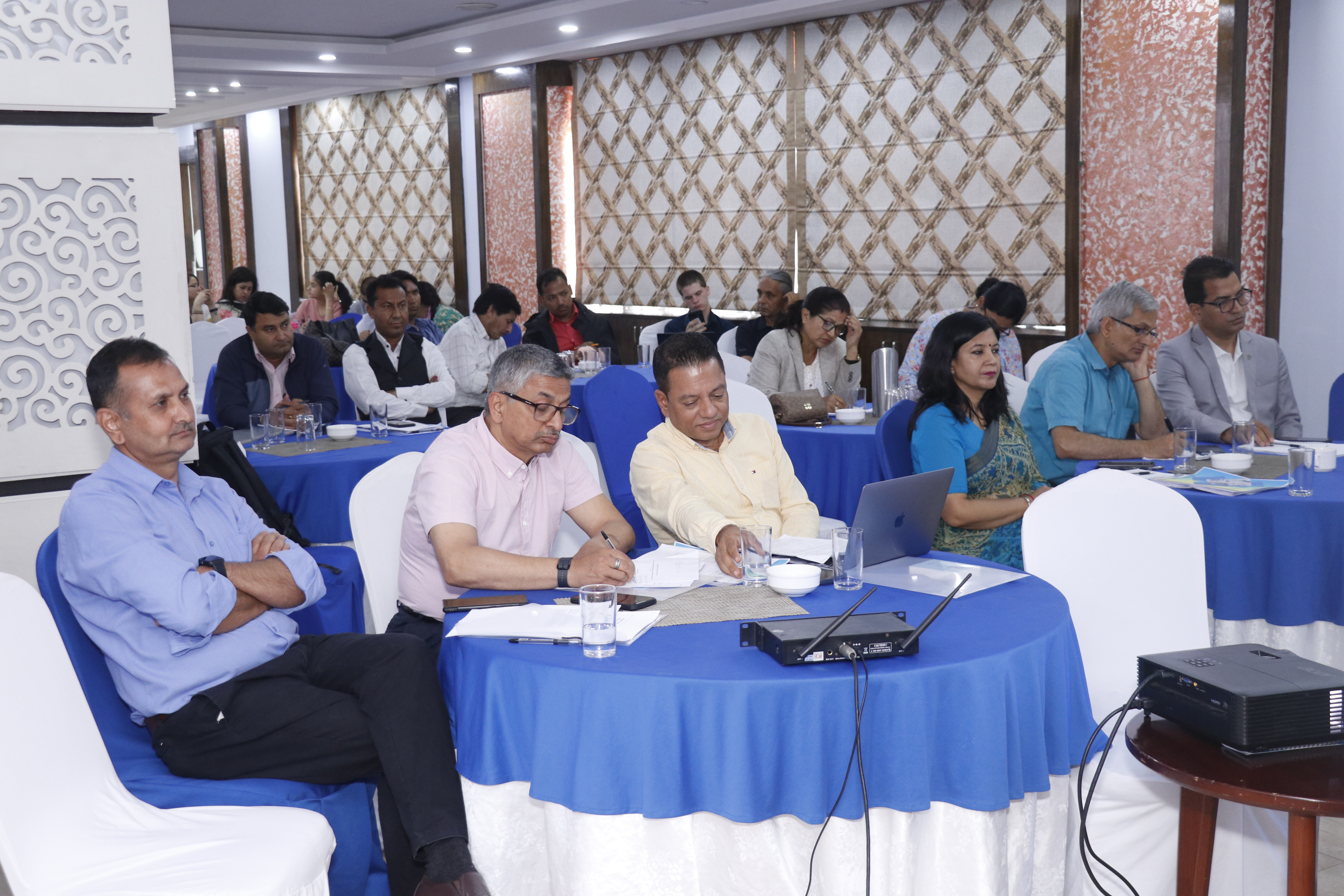
Freedom Forum organized a national seminar titled ‘Enabling Democracy through Free and Safe Press’ in Kathmandu on May 28, 2026 in collaboration with Friedrich Ebert Stiftung (FES) Nepal.
Speakers and participants called for comprehensive media law and policy reforms to address growing challenges to press freedom, journalists’ safety and media sustainability in Nepal in the seminar.

Speaking as a keynote speaker, Member of Parliament Hon. Prakash Chandra Pariyar assured his commitment to defending press freedom and journalists’ rights. Being a journalist himself, Hon. Pariyar described himself as a bridge between Parliament and the media community and pledged to support reforms that strengthen media freedom, democracy and human rights.
Highlighting seminar objectives, FF Executive Chief Taranath Dahal stressed that a free, independent and credible press is essential for democratic governance. He said the event was aimed to build a common understanding among stakeholders on the need for legal, policy and institutional reforms to strengthen media freedom and democracy.
Following the keynote address, the seminar proceeded with two thematic sessions featuring paper presentations on journalists' safety, media law, and policy reforms.

The first session focused on press freedom and journalists’ safety. Senior journalist Namrata Sharma presented a paper on the state of press freedom in Nepal. She noted that despite constitutional guarantees and Nepal’s relatively favorable position in international press freedom rankings, journalists continue to face physical, digital and economic threats. She highlighted increasing incidents of attacks against journalists, online harassment, misuse of legal provisions such as Section 47 of the Electronic Transactions Act and growing safety concerns for women journalists.
Session moderator, RSF correspondent Binod Dhungel emphasized that journalists’ safety should be viewed beyond physical protection and should include professional security, economic stability, mental well-being and digital safety.
Commenting on Sharma's paper, Dr. Binod Bhattarai suggested incorporation of UNESCO’s comprehensive Journalists’ Safety Indicators into press freedom violations monitoring systems. Further, National Human Rights Commission (NHRC) multi-stakeholder mechanisms should be a shared responsibility of journalists, concerned stakeholders and commission itself for its effectiveness and sustainability.
Joint Secretary at NHRC, Yagya Adhikari urged the media rights organizations to engage actively with the mechanisms and also formally file complaints regarding violations with the NHRC to facilitate institutional action. He also recommended to establishment a dedicated journalist protection fund.

The second session focused on media law and policy reform. Presenting the paper on the issue, former Chief Information Commissioner Dr. Suresh Acharya argued that many existing media laws were enacted before the digital era and no longer adequately address current context. He called for an integrated national media policy and an umbrella media law that would govern all forms of media, including digital platforms.
Senior journalist Anita Bindu noted that emerging challenges such as fake information, misinformation and other evolving risks, including various forms of violence must be taken into account for media related policy reforms. In this context, relevance and effectiveness of existing media policies must also be reviewed.
Assistant Professor at Tribhuvan University Kundan Aryal emphasized the importance of regulating digital platforms in ways that protect freedom of expression while addressing misinformation and harmful content. He also raised concerns about the government’s recent advertisement directive, arguing that it could negatively affect media independence and sustainability.
Federation of Nepali Journalists Vice-President Nitu Pandit stressed that any media-related legislation must be developed through broad consultation with stakeholders. She reiterated FNJ’s position in favor of an independent and autonomous Media Council and called for legal reforms that promote media freedom rather than control.

In the closing session, Freedom Forum Executive Chief Taranath Dahal emphasized the need for continued collaboration among media organizations, civil society and state institutions to advance media reform and strengthen democratic governance. Chairperson Hari Binod Adhikari urged stakeholders to remain vigilant in defending press freedom and democratic values.
During seminar, participants urged the government to engage meaningfully with media stakeholders before introducing new legislation. Such reform efforts are essential to ensure a free, safe and independent press that supports democratic governance and strengthens public accountability.
The event brought together total 89 participants with 26 female including journalists, parliamentarians, representatives from National Human Rights Commission (NHRC), Press Council Nepal, media organizations, academia and legal experts.