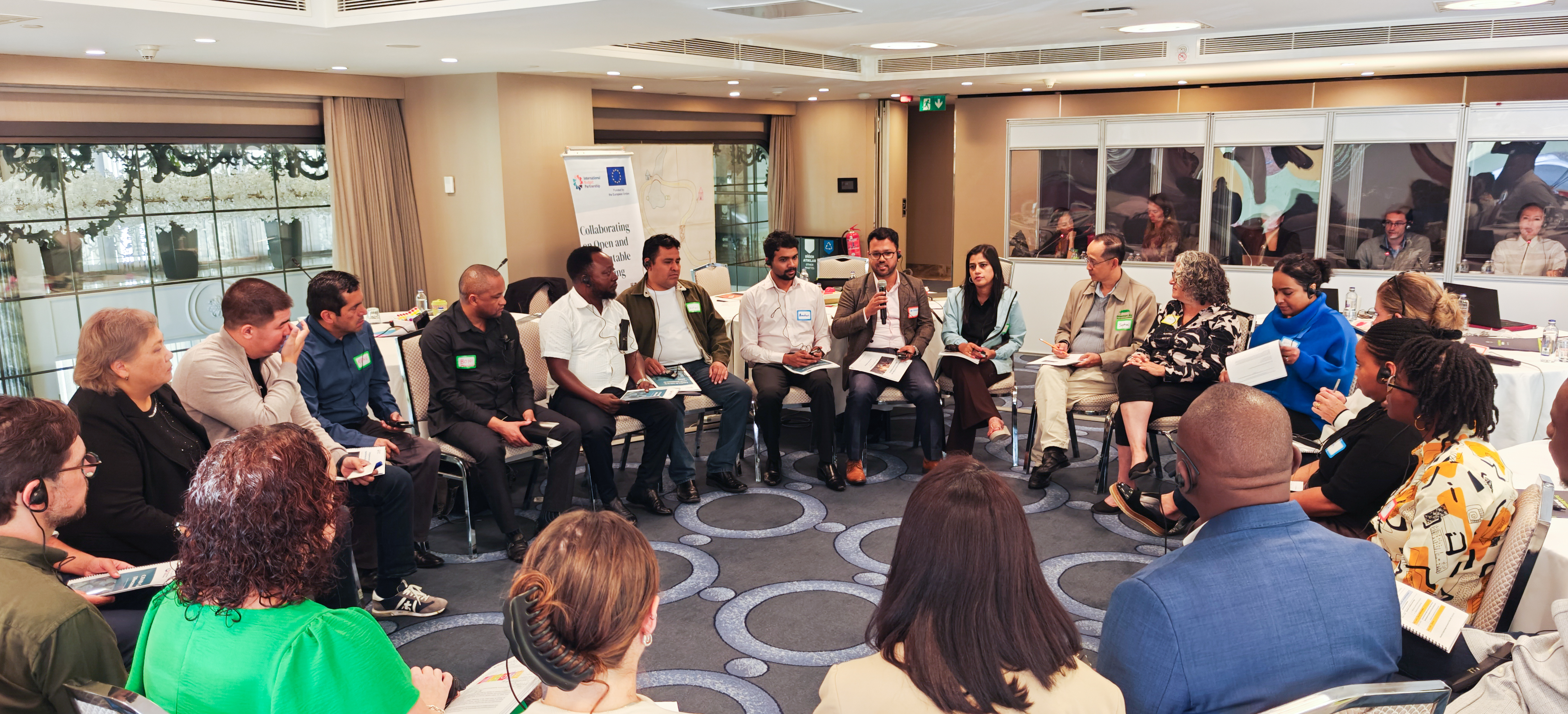
Representatives from Freedom Forum (FF), Subash Dahal and Aruna Adhikari, participated in the COAB Peer Learning Convening, held from September 30 to October 2, 2025. The program took place in Istanbul, Turkey.
Organized by the International Budget Partnership (IBP), a Washington, D.C.-based organization committed to promoting transparent and accountable public budgeting globally, the in-person gathering convened representatives from various IBP offices worldwide, along with civil society partners from nine countries: Bolivia, Burkina Faso, Cambodia, Jamaica, Kyrgyz Republic, Nepal, Sri Lanka, Tanzania, and The Gambia. Participants from Madagascar were unable to attend due to political turmoil and a curfew in the country's capital.
The convening centered on reflecting on Phase II of IBP's Collaborating for Open and Accountable Budgets (COAB) initiative. Launched in 2020, COAB has supported civil society organizations (CSOs) in building capacity, conducting research, and advocating for reforms in public finance management (PFM). Over three intensive days, participants and IBP representatives shared lessons learned, celebrated successes, addressed common challenges, and outlined a forward-looking path toward more inclusive budget governance.
Key highlights included in-depth discussions of case studies demonstrating the COAB model's tangible impact. One case focused on Sri Lanka and Nepal, illustrating how capacity-building and collaborative strategies empowered diverse CSOs to engage effectively in PFM reforms and influence policy outcomes. In Nepal's context, this has strengthened civil society efforts to advocate for greater budget transparency and citizen participation amid persistent governance challenges.
Another case examined advancements in restrictive environments, drawing on experiences from Cambodia, Kyrgyz Republic, and Rwanda. It emphasized how fostering trust through informal engagements and collaborative approaches can create openings for fiscal reforms, even under political constraints. These narratives underscored that persistence and strategic alliances produce results across diverse settings.
A third case from Tanzania showcased how CSOs capitalized on political opportunities to drive concrete changes, including the reinstatement of Public Expenditure Reviews—an essential mechanism for aligning government spending with national priorities in critical sectors such as agriculture, education, and health.
Throughout the sessions, participants reflected on COAB's core goals: building diverse reform coalitions involving CSOs, grassroots organizations, technical partners, government reformers, and international actors. Field evidence shows that such ecosystems enhance accountability, broaden participatory spaces, and produce strong evidence to support meaningful change. Discussions explored ways to extend beyond COAB's foundational phase toward a shared vision of enduring budget advocacy that improves how governments raise and allocate public resources.
The convening cultivated a profound sense of community. Participants connected deeply, valued one another's journeys, and exchanged innovative practices—ranging from data-driven advocacy and seizing political windows to building trust in challenging contexts. They openly shared obstacles, including restrictive policies and resource limitations, while identifying future opportunities to refine the COAB model, align it with national priorities, and advance their organizations' agendas.
As professionals deeply engaged in budget advocacy in their home countries, all attendees departed Istanbul with renewed ownership of the approach. Concrete examples and lessons will enable CSOs to build capacity strategically, pursue targeted research, and advocate more effectively to influence decision-makers.
The event reinforced a fundamental principle: understanding public budgets is the critical first step in transforming public resource governance for the benefit of all citizens. IBP's initiative continues to grow this global network of champions, reminding participants that progress is achievable through cross-border collaboration.
Freedom Forum expresses deep gratitude for the opportunity to participate in this journey and looks forward to applying these insights in Nepal to advance more open, accountable budgets at home and contribute to similar efforts worldwide.