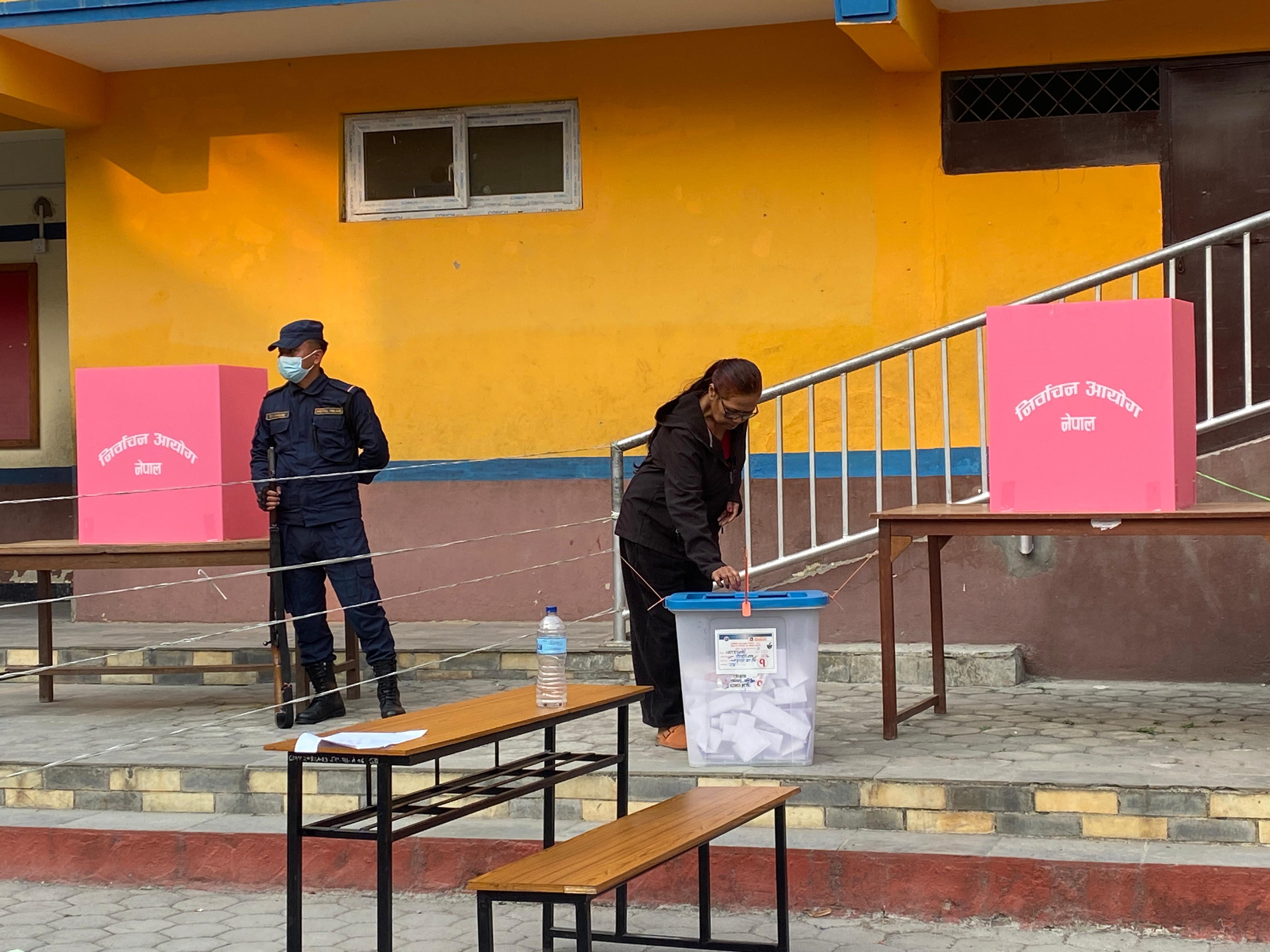
Nepal held general elections for the House of Representatives on March 5, 2026, electing representatives to all 275 seats in the federal parliament. A total of 93 political parties fielded candidates across the country, including 388 women candidates, one representing the LGBTQI community and 157 independent candidates. Despite taking place in a highly volatile political environment, the elections were concluded peacefully. Although many new challenges and trends noted in digital space have highly impacted electoral integrity and democratic process.
The polls marked a significant democratic resurgence following the 2025 Gen Z uprising. However, the environment for freedom of expression remained fragile for both citizens and political actors, particularly on social media platforms. The uprising itself, had been triggered by widespread youth anger over systemic corruption and the government’s decision to impose a social media ban, which resulted in dozens of deaths, thousands of injuries, and ultimately the toppling of a two-thirds majority government.
Election campaign digitized
Following directives from the Election Commission Nepal to limit campaign spending and restrict campaigning to a 15-day period, political parties heavily shifted toward digital campaigning. As a result, information technology professionals were more engaged in designing digital campaign materials than in previous elections, where traditional campaign tools such as banners and printed manifestos dominated.
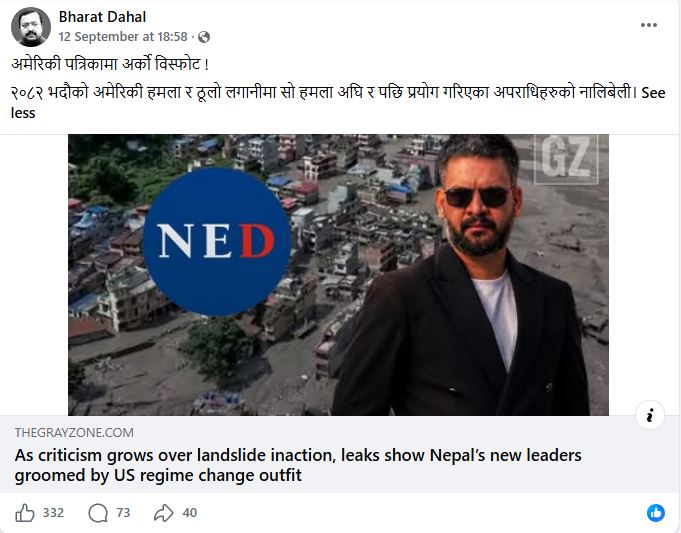
A noticeable transformation occurred as candidates increasingly used social media and messaging apps to communicate their manifestos and appeal directly to voters, replacing conventional door-to-door campaigning. Media reports also indicated significant spending on social media advertisements during the campaign period. However, this digital transition also introduced new risks. This year’s elections witnessed an unprecedented surge in misinformation and disinformation, especially across digital platforms. Social media users and journalists who expressed critical views whether supportive or opposing candidates faced threats, harassment and intimidation.
Attacks on Media and Journalists
Journalists encountered multiple incidents of violence and obstruction while reporting on election-related activities. Freedom Forum documented at least five violation incidents during the election period.
- On February 8, Annapurna Post National daily newspaper’s local correspondent Shiba Dhungana was threatened for reporting on candidates contesting the elections in Okhaldhunga, Koshi Province.
- On February 26, a prominent online news portal Ratopati.com ’s Koshi Province bureau chief Arjun Acharya was attacked in Jhapa-5 while covering a door-to-door campaign of Communist Party of Nepal (UML) Chairperson KP Sharma Oli. His mobile phone was confiscated and he sustained injuries to his head, eyes and face.
- On February 27, Raju Subedi, Presenter of online television Tvannapurna.com, received death threats and abusive messages on social media over his reporting on election-related issues, including allegations involving local political leaders on citizenship issues in Baglung, Gandaki Province.
- On February 28, Sunrisetvnews.com reporter Sudeep Thapa was physically assaulted in Kailali, Sudurpaschim Province while returning home after covering election activities, sustaining injuries to his eye and head.
In addition to physical attacks, regulatory pressures also emerged.
- On February 16, the Election Commission (ECN) wrote to the Press Council Nepal (PCN) to take action against Setopati.com, an online news portal, for publishing a public opinion poll on election outcomes. The Press Council sought clarification, alleging a violation of the code of conduct. Setopati.com subsequently filed a writ petition at the Supreme Court, arguing that the move violated constitutional guarantees of press freedom. On March 9, the Election Commission imposed a fine of NPR 100,000 on the media.
Such incidents risk fostering self-censorship among journalists, particularly when reporting on sensitive issues such as corruption and political movements. Elections Commission’s Information Integrity Promotion Center claimed 612 contents as ‘harmful information’ published on various platforms including media outlets from February 20-26. The commission further claimed that 74 cases were referred to the Press Council Nepal.
However, Press Council Nepal reported that the council received 25 letters seeking action from Election Commission. Of these, 16 cases have been resolved, six were notified regarding their content and remaining three were cautioned to publish credible content. These were alleged for violation of election code of conduct and publishing misleading contents such as public polls, fake screenshots of news portals. Chief Administrative Officer Deepak Khanal told Freedom Forum that the Council’s own monitoring between January 18 to March 8 identified total 987 media publishing fake or misleading contents. Of these, 844 were registered media and 143 involved fabricated screenshots impersonating credible media. The council notified 125 media through phone calls and issued letters to 269 media. Further, 43 cases were referred to the Cyber Bureau of Nepal Police and 550 remain under investigation at the Council.
Rampant Mis/Disinformation and misuse of AI tools
The pre- and post-election period saw a surge in misinformation across social media and online news portals, undermining information integrity- a core pillar of freedom of expression. Political speeches, statements and public opinions were frequently distorted in ways that could influence voter decision-making.
According to a study on misinformation trends and fact-checking during elections conducted by NepalFactCheck.org Editor Umesh Shrestha, misinformation increased significantly during the five-week period surrounding the elections, from February 1 to March 23. Preliminary findings of the study suggests that total 125 fact-checking reports were published analyzing 113 election-related content during this period. These fact-checking were done by NepalFactCheck.org (69), Techpana fact-check (54) and NepalCheck (2).
The study notes that old videos and statements were repurposed and circulated as current content to discredit candidates. For instance, an interview of Rastriya Swatantra Party (RSP) candidate Sobita Gautam seven years ago was selectively edited and shared on social media; while a speech by Nepali Congress candidate Gagan Thapa on indigenous communities was edited to suggest offensive remarks.
Artificial intelligence (AI) tools further amplified the problem. Deepfake videos depicting Indian celebrities supporting Nepali candidates, as well as AI-generated content exploiting religious sentiments, circulated widely. On February 26, a video of Indian celebrity Ranbir Kapoor supporting RSP candidate Balendra Shah went viral on social media. NepalFactCheck.org verified the content as baseless and misleading as it was created using AI. Similarly, on March 5, posts circulated on social media claiming that a ballot box was damaged due to gunshot from the police showing a large hole in the ballot box with torn ballot papers inside the box. A fact-check by Techpana.com confirmed that the image was AI generated.
Some of these posts also linked the leaders to the religious sentiments and attempted to manipulate the voters. On the first week of March 2026, a photo circulated on social media claiming that Leader Balendra Shah wore a cap, typically worn by the Islam followers and that he could not protect Hindus and the state. Techpana fact-check confirmed that the photo was edited and shared on social media with the intent to mislead public and manipulate voters’ perception.
Online harassment and gendered abuse
Women candidates and public figures were disproportionately targeted with online abuse, harassment and disinformation. They faced body shaming, trolling and coordinated attacks aimed at undermining their credibility and participation.
Few examples are- RSP candidate Ranju Darshana, who contested the election during the final stage of her pregnancy, was subjected to obscene and abusive comments. Another candidate of proportional seat from RSP and artist Reema Bishwakarma was targeted with AI-generated deepfake images linking her inappropriately with male leaders. Similarly, Bina Kadayat, a solo candidate of RSP from Jumla, faced derogatory remarks on her personal life.
These cases are indicative of a broader pattern. Women candidates are frequently targeted not only personally but also through attacks on their families, discouraging their participation in politics. Supporters of such candidates also faced trolling and harassment.
To conclude, these incidents highlight a troubling gap between legal provisions and their practical implementation, particularly of fundamental rights during elections. Although Nepal’s constitution ensures freedom of expression and press freedom, these rights remain contested in practice. While this year’s election was not visibly influenced by the misuse of AI-generated content, potential risks in future cannot be ignored. With the upcoming local and provincial elections expected to involve thousands of candidates, the use of social media and digital platforms is likely to have significant impact on civic opinion and electoral decision making. Thus, serious multi-stakeholders’ dialogue based on current experiences to ensure a safe electoral environment and effective regulation of digital space is an urgent need.
Moreover, the spread of mis/disinformation, attacks on journalists and targeted online abuse especially against women candidates undermine election integrity, affect public decision-making and hinder inclusive democratic participation. These challenges underscore the urgent need to strengthen media and information literacy among citizens. Promoting independent fact-checking skills of civil society organizations and fact-checkers and increasing public awareness of journalists’ rights safety are steps toward safeguarding democratic processes in Nepal’s evolving digital landscape based on this year’s electoral experiences.